
 Fleeing and Eluding in Texas
Estimated Reading Time: 9 minutes
Key Takeaways:
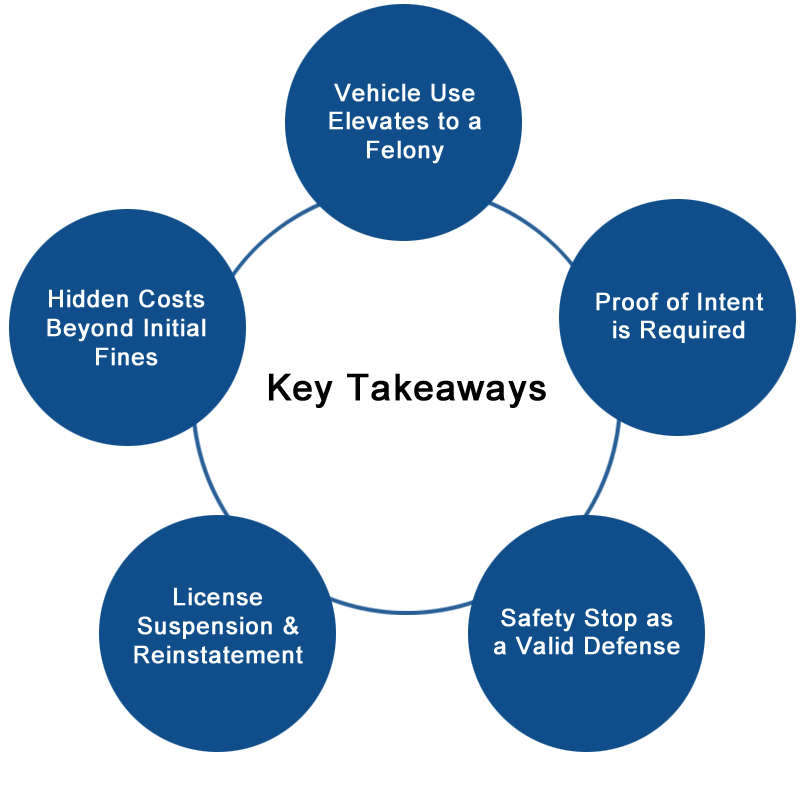
Vehicle use upgrades the charge to a felony: While running away on foot is typically a misdemeanor, using a car, boat, or aircraft to evade arrest is an automatic state jail felony or higher.
Proof of intent is required: To be found guilty, the state must prove you intentionally or willfully ignored a signal to stop from an officer you knew was a member of law enforcement.
Safety stops can be a valid defense: Seeking a well-lit, populated area to pull over while using hazard lights can demonstrate you were not intentionally fleeing, but rather ensuring your personal safety.
Convictions result in license suspension: A conviction for fleeing or eluding triggers an automatic driver’s license suspension for up to one year and requires a specific reinstatement process involving fees and special insurance.
Hidden costs go beyond initial fines: In addition to criminal fines, you may be responsible for thousands of dollars in court fees, monthly probation supervision, and expensive rehabilitative programs.
In Texas, the terms fleeing and eluding are often used interchangeably in casual conversation, but legally, there are two distinct statutes that cover this behavior: fleeing or attempting to elude a police officer and evading arrest or detention. The primary difference between the two lies in the severity of the charge and what the state must be able to prove in terms of your intent.
The law for fleeing or attempting to elude a police officer says that if you are driving a car and a police officer signals you to stop, you must do so. To be guilty of this crime, you have to make the direct choice to ignore them and intentionally not pull over, even though you know they are there. The law is strict about how a police officer must appear to you when these circumstances arise. They must be in their proper uniform, with their badge clearly visible, and they must be driving an officially marked police car. If they are in an unmarked car and in their civilian clothes, it will be difficult for the prosecution to prove that you broke this specific law.
The consequences of this behavior depend on how you drive as you move away from the officer. Usually, it is a class B misdemeanor, which can be punishable by up to 180 days in jail and a fine of up to $2,000.00. However, if you drive recklessly and take dangerous risks, such as speeding or running red lights, the charge can be upgraded to a class A misdemeanor. This higher charge can result in up to one year in jail and a $4,000.00 fine.
Evading arrest is a much more serious criminal offense. This charge applies when you know an officer is trying to arrest or detain you for a crime, and you intentionally run away to avoid being caught. The rules for the officer’s appearance are a bit looser here. If the prosecution can prove that you knew they were a cop, they don’t necessarily have to be in a fully marked car. The most significant difference between these charges is the punishment. While fleeing is usually a misdemeanor, using a vehicle to evade arrest is an automatic state jail felony. Think of fleeing as disobeying a signal, while evading is about trying to escape the law, which is why the penalties for evading are so much harsher.
Attempting to Flee and Elude Law Enforcement
Fleeing and eluding aren’t defined by a single action, like high-speed racing. Instead, they are defined by failing to comply with specific police commands while driving. Technically, any action that shows you are aware of an officer’s signal but are choosing not to stop can qualify.
Fleeing and eluding is what happens whenever you realize a police officer wants you to pull over, but you make a conscious choice to keep going. The most basic form of this is simply refusing to stop. It doesn’t matter if you aren’t speeding. Continuing to drive for a long distance after an officer turns on their lights or sirens is considered a willful failure to stop. Another common action is speeding away, where you press on the gas to put distance between your car and the police. This is often used as proof in court that you were intentionally trying to get away.
Other actions that count include trying to hide your car, such as turning off your headlights or taillights at night so the officer can’t easily follow you. You can also be charged with evasive maneuvering, which includes making sudden U-turns, darting down side streets, or cutting through parking lots and private property to lose the officer. Finally, even passive actions count. If you pull over but then drive away as the officer approaches your window, or if you drive very slowly and refuse to put the car in park, you are legally fleeing. If these actions are done dangerously, such as driving the wrong way or at very high speeds, the law considers it reckless, which can drastically increase the consequences.
Stopping Safely
If you find yourself being signaled to stop by a vehicle that you don’t recognize as a clearly marked police car, or if you are in a dark, secluded area, there are specific steps you should take to show you are complying without putting yourself at risk. Legally, the goal is to demonstrate that you are not intentionally fleeing, but rather seeking a safe environment to pull over.
First, immediately slow down and turn on your hazard lights. This signal tells the officer that you see them and are acknowledging their presence. Second, if you can do so safely, call 911 to verify that the person pulling you over is a real police officer; the dispatcher can see the officer’s location and confirm the stop. Finally, continue driving at a reduced speed toward the nearest well-lit, populated area, such as a gas station or a grocery store parking lot, and pull over as soon as you arrive. By following these steps, you create a trail of evidence that includes a recorded 911 call and a low-speed record, which can be used to defend against a willful fleeing charge.
Evading Arrest and Detention
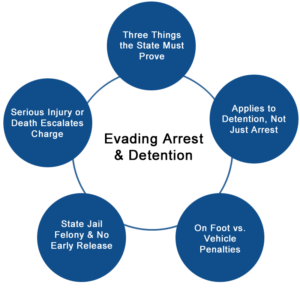
Evading arrest or detention is when you intentionally try to run away from someone you know is a police officer. Unlike a simple traffic ticket, this law is aimed at people trying to avoid being caught. To prove you are guilty, the state has to show three things: that you were definitely trying to get away, that you knew the person was a cop, and that the officer had a legal reason to stop or arrest you in the first place. This charge doesn’t just apply to being arrested. If a cop tells you to stay put or otherwise detains you while they ask you questions, and you decide to run, you have broken this law.
The punishment for this crime changes drastically depending on how you try to get away. If you run away on foot, it is usually a class A misdemeanor, which can lead to up to one year in a local county jail and a $4,000.00 fine. However, the moment you use a vehicle to get away, the law automatically treats it as a state jail felony. This is much more serious because you could be sent to a state jail facility for up to two years, and you usually have to serve every single day of that time with no chance of early release for good behavior. If anyone, including a bystander or the officer, gets hurt or killed during the chase, the charge jumps even higher to a third-degree or second-degree felony, which can result in up to 10 or 20 years in a state prison.
Sentencing for Fleeing and Eluding a Police Officer
A local county judge usually handles sentencing for fleeing or eluding because it is classified as a misdemeanor. If your flight was a basic failure to stop without any high-speed racing or dangerous maneuvers, it is usually classified as a class B misdemeanor. This means the judge can sentence you to up to 180 days in the county jail and order you to pay a fine of up to $2,000.00. However, if the prosecutor proves you were recklessly driving in a way that put other people in immediate danger, it becomes a class A misdemeanor. For this, the sentence can double, with a maximum of one year in jail and a fine of up to $4,000.00
Beyond just jail and fines, a judge can also sentence you to probation. If you are on probation, you might avoid jail time, but you will have to follow strict rules, such as performing community service, passing drug tests, and paying a monthly fee to the court. Additionally, the court must report your conviction to the state, which may result in your driver’s license being suspended for up to a year. It is important to remember that if you damaged anything while fleeing, such as a police car or a street sign, the judge will likely order you to pay restitution as well, which is the actual cost of repairing that property.
License Suspension and Reinstatement
If you are convicted of fleeing or eluding a police officer, it is likely that your driver’s license will be suspended because this is considered a serious traffic violation, with the suspension lasting for up to one year. Your license will not automatically be reinstated once that year is over. Instead, it will remain invalid until you take the specific necessary steps with the Department of Public Safety. If you get caught driving before you’ve officially fixed your license, you can be arrested for a new crime of driving while your license is invalid, which can lead to jail time and even longer suspensions.
To get your license back, you must complete a reinstatement process. This involves paying a $100.00 reinstatement fee to the DPS. You will also likely be required to obtain SR-22 insurance, a special certificate from your insurance company that proves you have coverage. This often makes your insurance much more expensive, and you usually have to keep it for two years. If you absolutely need to drive for work or school during your suspension, you can ask a judge for an occupational driver’s license.
An occupational driver’s license allows you to drive for essential needs, such as going to work, school, or the grocery store, while your regular license is suspended. The first step is to file a formal request, called a petition, in the county or district court where you live or where you were convicted. You must provide a sworn statement explaining exactly why you need to drive. Be prepared to pay a court filing fee, which typically ranges from $200.00 to $300.00.
Similarly to if you were working to get your standard license reinstated, you will need to obtain SR-22 insurance. Once the judge signs the court order, it will list strict rules, such as which counties you can drive in and what hours you are allowed on the road. Generally, you are limited to driving for 4 hours a day, though a judge can increase this to 12 hours if you show it is necessary for your job.
The final step is to send the signed court order, your SR-22 certificate, and a $10.00 annual fee to the Texas Department of Public Safety. You will also need to pay the $100.00 reinstatement fee. For the first 30 days, the signed paper from the judge serves as your temporary license, but you must keep a certified copy in your car at all times. Eventually, the DPS will mail you a plastic card that looks like a regular license but is clearly marked as an occupational license.
FAQs
What is the difference between fleeing and evading? Fleeing is a misdemeanor traffic violation for failing to stop for a signal, while evading is a more serious felony involving the intent to escape an actual arrest or investigation.
Can I be charged if I didn’t know the police were pulling me over? Yes, but the state must prove you intentionally ignored the officer.
Is it a felony to run from the police in a car? In Texas, using any vehicle to evade arrest is automatically a state jail felony or higher.
What happens to my driver’s license if I am convicted? A conviction will result in an automatic license suspension for up to one year.
What if I was only driving to a safe, well-lit place to pull over? This is often a successful defense if you slowed down and used hazard lights, as it shows you were complying safely rather than attempting to escape.
Sentencing for Evading Arrest and Detention
Your sentencing for evading arrest will depend primarily on whether you ran away on foot or used a car. If you run from a police officer on foot, it is typically a class A misdemeanor. This means a judge can sentence you to up to one year in a local county jail and order a fine of up to $4,000.00. However, the punishment becomes much more severe the moment a vehicle is involved. Using a car to evade an officer is an automatic state jail felony. For this, you can be sentenced to between 180 days and two years in a state jail facility. This is a unique category of crime that sits between a misdemeanor and a serious prison-level felony. These facilities differ from local county jails or major state prisons and are specifically designed for mid-level felony sentences. It is essential to know that state jail sentences are usually served day-for-day, with no early release for good behavior.
The sentences get even longer if the chase becomes dangerous or if someone gets hurt. If the police have to use tire deflation devices to stop you, or if someone suffers a minor injury during the pursuit, the charge is upgraded to a third-degree felony, which carries a prison sentence of 2 to 10 years. If the chase causes a serious injury or someone dies, it becomes a second-degree felony, and you could face 2 to 20 years in a state prison. In addition to prison time, all felony levels carry a potential fine of up to $10,000.00. Because these are felonies, a conviction also means losing rights like voting or owning a firearm, and it creates a permanent criminal record that is very difficult to hide from employers. A felony conviction can also threaten your ability to hold certain professional licenses, maintain government employment, or even find stable housing.
A state jail felony is a unique category of crime that sits between a misdemeanor and a serious prison-level felony. These facilities differ from local county jails or major state prisons and are specifically designed for mid-level felony sentences.
Fines and Fees for Fleeing and Eluding a Police Officer
The financial cost of a fleeing and eluding charge in Texas is divided into three main parts. The punishment fine, the court fees, and then the costs to get your life back to normal. First, the criminal fine is the penalty set by the judge. If your case is a standard failure to stop, the fine can be up to $2,000.00. If your driving was reckless and dangerous, that fine can go up to $4,000.00.
Second, you will have to pay mandatory court costs, which typically range from $200.00 to $500.00. Even if the judge decides you don’t have to pay a fine, Texas law generally requires these fees to be paid to fund state programs like victim compensation and courthouse security. If you can’t pay everything right away, the court might even charge you an extra $15.00 fee just for needing a payment plan.
Finally, there are the additional administrative costs. Because this is a serious traffic crime, your driver’s license will likely be suspended, and you must pay a $100.00 reinstatement fee to the Department of Public Safety. You are also responsible for paying the towing and storage fees for your car, which often cost hundreds of dollars. If you are put on probation instead of going to jail, you will be charged a monthly supervision fee of $25.00 to $60.00.
Even though fleeing and eluding are usually misdemeanors, judges have the authority to impose rehabilitative conditions on anyone placed on probation. A judge can require you to take any class they believe will help you follow the law in the future. This means that even for a lighter charge, you might still be required to pay for and attend the same expensive programs.
The most common programs for this charge focus on your judgment behind the wheel. You may be ordered to take decision-making or cognitive skills classes, which can cost between $300.00 and $1,000.00, to ensure you don’t panic and run from the police again. Judges also frequently mandate a victim impact panel, costing $25.00 to $50.00, to show you the potential dangers of high-speed chases. If there is any concern about drugs or alcohol, the judge can order random drug testing at a cost of $20.00 to $50.00 per test, as well as community service, which typically requires a $50.00 insurance fee to start your hours. It is likely that you will be responsible for paying for all of these classes. As a result of these hidden fees and additional measures, your overall cost will be far higher than the initial fine alone.
 Fine and Fees for Evading Arrest and Detention
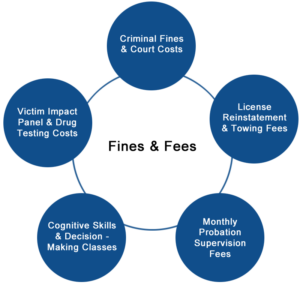
The cost of evading arrest and detention charges is divided into several expensive layers. First, there are the criminal fines set by the court as punishment. If you ran away on foot, you could be fined up to $4,000.00, but if you used a vehicle or someone was hurt, the fine could reach a maximum of $10,000.00. The situation becomes much more serious if the police believe you were specifically trying to escape arrest, which can also result in a fine of $10,000.00. On top of the fine, you will be required to pay mandatory court costs, which are usually between $200.00 and $600.00. These fees cover things such as DNA testing for felons and the mileage the officer drove to take you to jail.
If the judge allows you to stay out of prison on probation, the costs continue for years. You will have to pay a monthly supervision fee ranging from $25.00 to $60.00. Over time, this can add up to thousands of dollars. You might also have to pay $5.00 to $15.00 per day if you are ordered to wear a GPS ankle monitor. Perhaps the most expensive hidden cost is asset forfeiture. The state can actually file a lawsuit to take and keep the car you were driving during the chase, meaning you lose the entire value of your vehicle on top of all the other fines and daily storage fees at the impound lot.
Additionally, judges might order you to take classes and undergo rehabilitative programs in order to help you make better decisions, and you are almost always required to pay for them yourself.
If a judge believes you ran because you struggle with split-second decisions or stress, they may order cognitive behavioral classes. These programs typically cost between $300.00 and $1,000.00 for the full course, with each session costing about $20.00 to $50.00. If drugs or alcohol were involved, you might be required to attend a drug education class, which generally costs $100.00 to $200.00, though more intensive evaluations can add an extra $50.00 to $100.00.
The court also wants you to understand the danger of high-speed chases, so they may send you to a victim impact panel, with sessions usually costing between $25.00 and $50.00. However, the costs for monitoring and testing can be much higher and more frequent. You will likely have to pay for your own random drug tests, which cost between $20.00 and $50.00 each.
Even community service can have a small price tag. While community service involves donating your time, most counties charge a one-time $50.00 fee to cover the insurance needed while you work. When you combine these with the monthly probation fees, the total cost of rehabilitation can easily reach several thousand dollars over the course of a year.
Water and Aircraft
These laws don’t just apply to cars. They also treat fleeing in a boat or a plane as a very serious crime. Both a watercraft, such as a boat or jet ski, and an aircraft are included in the definition of vehicles. If you are on the water and an officer signals you to stop using blue lights or a siren, you are legally required to pull over. Fleeing in a boat is almost always charged as a third-degree felony, even for a first offense, because the state believes high-speed boat chases are extremely dangerous to other people on the water.
If you are convicted of evading in a boat, you will face the same expensive fines and classes as you would with a vehicle, but you might also be forced to take a Texas boater education Course, which usually costs between $20.00 and $50.00. When it comes to an aircraft, the consequences are even more severe. While it is very rare to flee on a plane, doing so will almost certainly result in a felony charge and cause the Federal Aviation Administration to permanently take away your pilot’s license.
The main thing to remember is that prosecutors usually use the Texas Penal Code rather than the basic traffic laws in these cases. This is because the Penal Code specifically lists watercraft and aircraft as vehicles that elevate the crime to a felony. Whether you are on a highway, a lake, or in the sky, the law requires you to stop as soon as you see a clear signal from a recognizable officer.
 Defending Yourself from the Charges
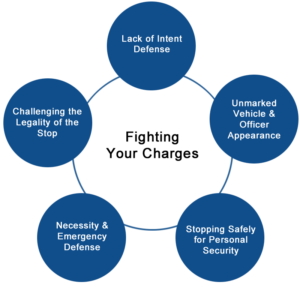
Your defense attorney will often look for ways to show that you didn’t break the law on purpose or that the police didn’t follow proper procedure. The most common defense is lack of intent, which means you simply didn’t know the police were trying to stop you. While the state will try to prove that you willfully ignored the officer, your attorney might argue that because of loud music, bad weather, or heavy traffic, you didn’t hear the siren or see the lights right away. They might also point out that if you stopped as soon as you reached a safe, well-lit area, it was clear that you weren’t trying to escape. You were just worried about your safety.
Another strong defense involves the appearance of both the officer and their vehicle. Texas law is very strict about this: the officer must be in a proper uniform with a visible badge, and their car must be clearly marked as a police vehicle. If you were being followed by an unmarked car with hidden lights, an attorney could argue you reasonably believed you were being followed by a stranger and were actually trying to get away from a threat.
The necessity defense can also be used if you had a genuine emergency, such as rushing someone to the hospital, where stopping would have caused more harm than continuing to drive. This is a legal excuse that says you only broke the law because you were in a situation where you had no other choice to prevent a much bigger disaster. This is thought of as an affirmative defense, since you are telling the court that while you did commit the crime, you did so out of the belief that you were stopping greater harm from being committed. To win with this defense, you have to prove that the danger you were facing was imminent, meaning it was happening right that second, and that a normal, reasonable person would have done the exact same thing in your shoes.
Finally, a lawyer might challenge the legality of the stop itself. For the more serious charge of evading arrest, the officer must be lawfully trying to detain you. If your attorney can prove the officer had no legal reason to pull you over in the first place, they may be able to get the charges dropped because the initial interaction was against your rights. By showing that the situation was a misunderstanding or a matter of safety rather than a willful crime, your defense team works to reduce or dismiss the charges.
A Story Told Well
Let us be your champion and help you to put your life back on track. Through our intensive preparation, we work diligently to stay ahead of the prosecution and get charges dropped before a trial begins. As battle-tested veterans of the process, we leave no stone unturned and know just how to conduct the meticulous review of the evidence needed to effectively bolster your defense. With experience handling over 800 criminal cases and training aligned with law enforcement protocols, our firm prepares every case with the intent to win rather than just accepting a plea deal. Invest in yourself and your future. Contact us today for a free case consultation.
Call (512) 469-6056 or Schedule a Free Case Evaluation Online