
Travis County Warrant Search
Estimated Read Time: 6-7 Minutes
Taking control of your legal standing in Travis County is a powerful step toward peace of mind, and the tools available today make it easier than ever to navigate the system with confidence. Whether you are checking on a minor traffic matter or a more serious court concern, the shift toward transparent, digital databases means you can proactively manage your affairs from the comfort of your home. By understanding the simple distinctions between city, county, and district records, you transform a daunting task into a straightforward process of self-advocacy. This journey of staying informed not only protects your future but empowers you to resolve any outstanding issues on your own terms, ensuring you move forward with clarity and total security.
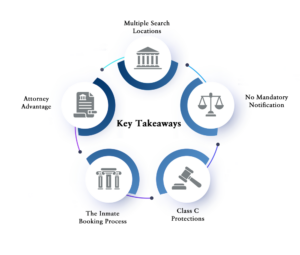 Key Takeaways:
Multiple Search Locations: Because different levels of government handle different crimes, there is no single database for all warrants; you must check specific city, county, or district records depending on the offense. For example, felonies are managed by district courts while minor traffic tickets are handled by municipal or justice of the peace courts.
No Mandatory Notification: Texas law generally does not require police to notify individuals of active warrants for serious crimes, often preferring the element of surprise to prevent flight. Under the Texas Code of Criminal Procedure, an officer only has to inform you of a warrant at the moment of arrest.
Class C Protections: For minor Class C tickets, judges are typically required to attempt to notify you by phone or mail and provide a 30-day warning before issuing an arrest warrant. If you voluntarily appear to resolve the case before being caught, the law requires the judge to recall the warrant immediately.
Online Search Limitations: While public databases like Warrants on the Web are useful, they are not definitive because of potential system delays or pocket warrants that have not yet been processed. Additionally, warrants from smaller surrounding cities may not appear in the county’s main system and may require direct calls to specific court clerks.
The Inmate Booking Process: Individuals arrested in Travis County are taken to central booking, where they must be seen by a magistrate within 48 hours for their charges to be read and bail set. A bond amount will not appear in the online inmate search until after this meeting.
Looking Up a Warrant in Travis County
In Travis County, checking for a warrant is not a one-stop shop since different levels of government handle different types of crimes. Serious offenses, such as felonies, are handled by the district courts, while lesser offenses, such as DWIs or minor thefts, are handled by the county courts. Even minor issues, such as traffic tickets or city rule violations, are handled by municipal or justice of the peace courts. Because each of these offices uses its own filing system, a felony warrant won’t appear on a city ticket website, and a speeding ticket won’t appear in the high-level felony records. This is why you have to check multiple places to get a complete answer.
It is important to be proactive in your search, as Texas law generally does not require the police to tell you that they are looking for you. For most serious crimes, the police prefer the element of surprise so that a person doesn’t try to hide or run away. In fact, under the Texas Code of Criminal Procedure Art. 15.26, an officer only has to tell you about the warrant at the very moment they are arresting you. They don’t even need to have a paper copy of the warrant in their hand at the time, as long as they can verify it exists in their computer system.
The only real exception to this no-warning rule is for minor Class C tickets. According to Tex. Code Crim. Proc. Art. 45.014, a judge cannot issue a warrant for a missed court date unless they first try to notify you by mail or phone and give you 30 days to fix the problem. However, because mail can get lost or addresses can be out of date, it is still possible to be surprised by warrants for old tickets. Searching these databases yourself allows you to find and resolve these issues on your own terms, often by just paying a fine, before a simple traffic stop turns into an unexpected trip to jail.
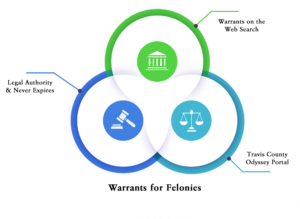 Warrants for Felonies
If you believe there is a felony warrant out for your arrest in Travis County, the most direct way to check is through the Travis County Sheriff’s Office. They maintain a public website called Warrants on the Web where you can search by a person’s first name, last name, and date of birth. Think of this database as the central hub for active arrest orders in the county. However, it is important to remember that there can be a delay between a judge signing a warrant and the computer system updating, so a clean search isn’t always a 100% guarantee that you are in the clear.
For a deeper look, you can use the Travis County Odyssey Portal, which is the official digital record-keeper for the local courts. Since felonies are serious crimes, they are handled by district courts, so you would look for case numbers that include DC. Within these records, look for the Register of Actions for terms such as “warrant issued” or “capias”. If you see these terms and the case is still marked as active, a warrant is likely out for you. You can also call the District Clerk’s Criminal Division at (512) 854-9420 to ask about record searches, though they may require a formal written request for a full criminal history.
Legally, these warrants are governed by the Texas Code of Criminal Procedure Art. 15.03, which gives judges the power to order an arrest if they see evidence of a crime, and Art. 23.03, which requires a warrant to be issued automatically once a grand jury decides there is enough evidence for a felony charge. Because felony warrants never expire and law enforcement can arrest you at any time, such as during a routine traffic stop, it is usually best to have a lawyer check the system for you.
Warrants for Class A and Class B Misdemeanors
Searching for a Class A or B misdemeanor warrant in Travis County is very similar to looking for a felony warrant, but you have to look in a different grouping of records. The main place to start is the Travis County Sheriff’s Office website, specifically their Warrants on the Web portal.
When you search by name and birthdate, take a look at the degree column. A Class A misdemeanor will be listed as MA, and a Class B as MB. These are more serious than a simple ticket but less severe than a felony. While this website is helpful, it is not always updated in real time, so a lawyer is often the only person who can give you a 100% certain answer.
The biggest difference between these warrants and felony warrants is which court oversees them. Misdemeanors are handled by the county courts, and their case numbers in the Odyssey Portal usually start with a C. Felonies, on the other hand, are handled by district courts and start with a D. If you find a case starting with C that says “capias issued” or “warrant issued,” it means the court has ordered your arrest. Because these are county-level crimes, the Travis County Clerk is the official record-keeper. You can call their misdemeanor office at (512) 854-9188 to ask about a specific case or to request a background check.
Class C Municipal Warrants
Looking up a Class C warrant from the City of Austin differs from checking for serious crimes because these warrants are for fine-only offenses, such as speeding tickets or city ordinance violations. These warrants usually won’t show up on the main Travis County Sheriff’s website. Instead, you have to go to the Austin Municipal Court Public Case Search website or the Austin Police Department’s warrant list. By typing in your name or driver’s license number, you can see if you have an active warrant. This can happen if you forgot to pay a ticket or missed a required court date.
The main difference with a Class C warrant is that it typically cannot lead to a prison sentence, and the legal punishment is almost always just a fine. Under Texas Code of Criminal Procedure Art. 45.014, a judge is actually required to try to contact you by mail or phone to give you a 30-day warning before they even issue an arrest warrant for a missed court date. Furthermore, if you voluntarily show up to resolve the case before you are caught, the law requires the judge to recall the warrant.
Even though these are the least serious types of warrants, they are still legal orders for your arrest. If a police officer pulls you over for a minor traffic stop and sees an active Class C warrant in their system, they have the authority to take you into custody and bring you before a judge. However, many people can clear these up quickly by paying the fine online or visiting the Municipal Court to set up a payment plan or request a new hearing, which often removes the risk of immediate arrest.
FAQs
If I don’t find my name online, am I in the clear? No. Online databases are helpful but not definitive. Many warrants, especially those related to ongoing investigations or pocket warrants signed by a judge but not yet processed by the clerk, may not appear in public searches. Additionally, municipal warrants from smaller surrounding cities, such as Bee Cave or Sunset Valley, often require a direct call to their respective court clerks.
Will I be arrested if I call the court to ask about a warrant? Typically, no. Calling a court clerk to inquire about your status does not automatically trigger an arrest. However, inquiring in person at a courthouse or sheriff’s office is much riskier. If a warrant is active, the deputies on-site may be legally required to take you into custody immediately.
Is law enforcement required to notify me that I have a warrant? No. In Texas, law enforcement is not obligated to mail you a letter or call you regarding an active arrest warrant for felonies or Class A and B misdemeanors. The only major exception is Class C traffic tickets, which require 30 days’ notice before a warrant is issued for failing to appear.
What is a Capias Pro Fine warrant? This is a specific type of warrant issued after you have already been to court and been convicted. It is issued when a defendant fails to satisfy the judgment, such as failing to pay the required fines or complete community service. Unlike an arrest warrant, which brings you to court to answer a charge, a Capias Pro Fine is used to enforce a sentence that has already been handed down.
Can I clear a warrant without going to jail? Often, yes. For Class C tickets, you can typically recall the warrant by paying the fine or setting a new court date. For more serious charges, an attorney can often arrange a walk-through. This involves coordinating with the jail and a bondsman so that you are processed and released on bond within a few hours, rather than spending days in custody waiting for a judge.
 Travis County Justice of the Peace Warrants
Looking up a justice of the peace warrant in Travis County is like checking a specific branch of a library rather than a main office. In order to find it, you have to find the exact precinct where your case was filed. These warrants are usually for minor Class C issues, such as a ticket issued by a Sheriff’s deputy or a constable in an area outside the Austin city limits. To see if you have one, you can use the Travis County Justice of the Peace Records Search website and type in your name. Since there are five different JP precincts in the county, you might need to check with the specific office in the area where the incident happened, such as Precinct 1 for East Travis County or Precinct 3 for the West side.
The law provides you with a fair amount of protection for these minor offenses. According to Texas Code of Criminal Procedure Art. 45.014, a JP judge may not issue an arrest warrant for a missed court date unless they first attempt to reach you by phone or mail. They must give you a 30-day warning to come in and fix the situation. Even better, if you find out there is a warrant, and you show up at the court on your own to handle it, the same criminal procedure legally requires the judge to cancel the warrant immediately.
Because these are fine-only offenses, the court’s goal is usually to get the ticket paid or resolved rather than put you in jail. However, if you ignore the warrant and get pulled over by the police, they still have the legal authority to arrest you. To avoid that, you can call the clerk at the precinct office to ask about your status. Most of the time, you can clear the warrant by simply paying the fine online or setting up a new hearing date with the clerk, which effectively recalls the warrant and keeps you out of custody.
Precincts
Precinct 1
East Travis County
(512) 854-7700
East Travis County
(512) 854-7700
Precinct 2
North/Northwest Travis County
(512) 854-4545
North/Northwest Travis County
(512) 854-4545
Precinct 3
West/Southwest Travis County
(512) 854-6763
West/Southwest Travis County
(512) 854-6763
Precinct 4
Southeast Travis County
(512) 854-9479
Southeast Travis County
(512) 854-9479
Precinct 5
Central Austin/Downtown
(512) 854-9049
Central Austin/Downtown
(512) 854-9049
 Inmate Search
If you are searching for someone who may already be in custody, the Sheriff’s Office provides a 24-hour inmate locator.
If someone is arrested in Travis County, the first place they go is central booking at the Blackwell-Thurman Criminal Justice Center downtown. You can track their status by using the Travis County Sheriff’s Inmate Search website or by calling the jail’s 24-hour information line. When you search, you will typically see their mugshot, the charges against them, and where they are being held. However, do not be alarmed if you see a blank space next to “bond” at first. This just means the person hasn’t finished the administrative process of being booked into the system or seen a judge yet.
A critical step in this process is called magistration. The law requires that an arrested person be taken before a judge or a magistrate within 48 hours of their arrest. During this meeting, the judge officially reads the charges and sets bail. If the inmate search website still shows “none” for the bond after several hours, it usually means they are still waiting for this meeting. Once the judge sets a bond, that dollar amount will appear online, and you can then pay the full amount at the jail or hire a bail bondsman to help get them out.
While waiting, the inmate will likely be interviewed by pretrial services, which consider factors such as their job and family ties to determine whether they are a flight risk. After the initial booking downtown, some inmates may be moved to the larger Travis County Correctional Complex, especially if they are staying for more than a day or two. If you are trying to help someone get out quickly, the best strategy is to keep refreshing the inmate search page until you see a bond amount listed, as that is the green light that the jail is ready to accept payment for their release.
Schedule a Free Case Evaluation Today
An arrest or investigation often feels like the defining moment, but in reality, it is only the starting point. The true turning point is what happens next. The Law Office of Ken Gibson creates that turning point through a free, no-obligation case evaluation designed to bring control and direction at the earliest opportunity.
After the initial shock of a legal situation, uncertainty can take over, making it difficult to understand what steps to take or what outcomes are possible. This consultation interrupts that uncertainty. In a confidential setting, individuals can present their side of the story, ask critical questions, and receive clear, experience-based guidance.
At the same time, the defense team begins to take control of the case, documenting events, identifying time-sensitive evidence, and analyzing the prosecution’s position for weaknesses, such as inconsistencies, investigative flaws, or constitutional violations.
This is where the case begins to change direction. A defense strategy begins to take shape with the goal of achieving dismissal, reduced charges, or acquittal. With no cost and no obligation, the evaluation provides clarity, reduces stress, and marks the beginning of a more controlled and confident path forward.
Call (512) 469-6056 or Schedule a Free Case Evaluation Online